The Power of Words: How Individuals with IDD Are Redefining Identity and Inclusion
The Power of Words Matters More Than Ever
Words shape how we see ourselves — and how the world sees us.
For individuals with intellectual and developmental disabilities (IDD), language has not always been empowering. Harmful terms, including the continued use of the “R-word,” have contributed to stigma, misunderstanding, and exclusion.
But something powerful is happening.
Across Caregiver communities, individuals are choosing their own words — words that reflect who they are, how they feel, and how they want to be seen.
To see more of the individuals, stories, and powerful words shared across our markets, visit our full gallery here:
👉[View the Power of Words gallery]
If you are new to IDD services or exploring support options, you can also learn more about our approach to person-centered care and community-based services here:
👉 Caregiver Services
A Movement Toward Self-Expression and Identity
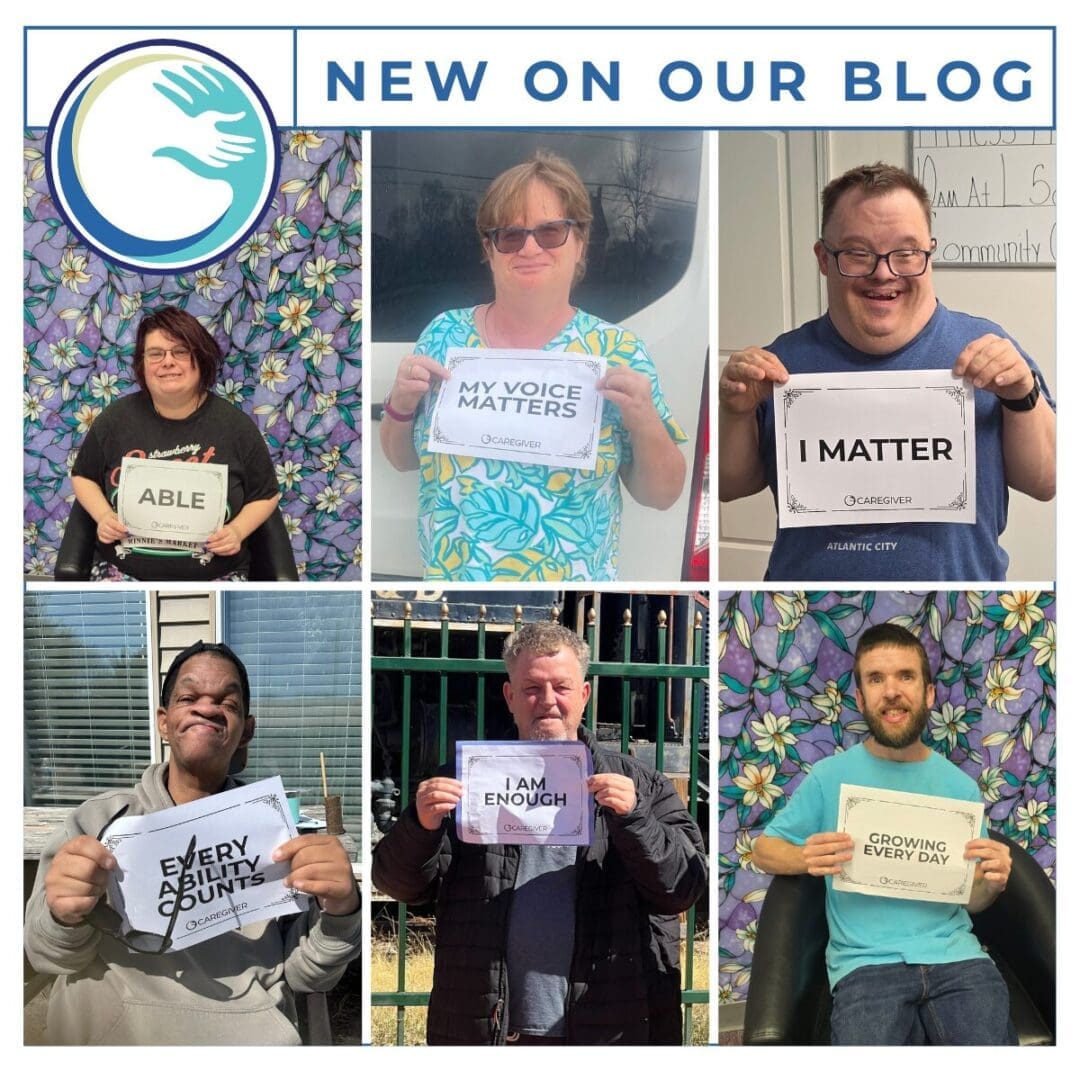
As part of Disabilities Awareness Month, individuals across multiple Caregiver markets participated in a simple but meaningful activity:
They chose a POWER WORD to represent themselves.
Not labels given to them.
Not words defined by others.
But words they chose.
Words like:
- “Proud”
- “Strong”
- “Bright”
- “Enough”
- “Understanding”
- “Independent”
Each word tells a story.
Each word represents identity, dignity, and voice.
In one image, an individual proudly shares “My Future is Bright.”
In another, someone celebrates “Proud to Be Me.”
Others express powerful needs and truths with words like “Understand” and “Train me so I can aid in my own care.”
These are not just words — they are expressions of self-advocacy, a key component of person-centered support models recognized across the field.
Learn more about national self-advocacy efforts through organizations like:
👉 https://selfadvocacyinfo.org/
Moving Beyond Harmful Language
While conversations continue around the harmful impact of the R-word, this campaign shifts the focus forward:
👉 From labels → to self-definition
👉 From stigma → to strength
👉 From assumptions → to voice
This aligns with broader disability rights efforts supported by legislation like the Americans with Disabilities Act (ADA), which promotes equal access, dignity, and inclusion for individuals with disabilities:
👉 https://www.ada.gov
This is what real inclusion looks like.
Not just awareness.
But empowerment.
Why This Matters for Families and Communities
The words individuals choose — “independent,” “proud,” “strong,” “understood” — aren’t just expressions.
They are reflections of goals, identity, and the kind of life each person wants to live.
But those goals don’t happen on their own.
For families navigating intellectual and developmental disability services, one of the biggest questions becomes:
“What happens next?”
This is especially true during major life transitions, like moving from school to adulthood, when families begin searching for adult disability services, IDD support services, and guidance for the transition from school to adult life.
Planning early helps turn those powerful words into real outcomes. It helps individuals:
- maintain structure
- build independence
- stay connected to their communities
- access the right services at the right time
If you or someone you know is looking for IDD services, residential support, day programs, or community-based services, you can explore Caregiver services in your area:
Because when individuals say “this is who I am” —
the next step is making sure they have the support to live it.
The Role of Providers, Educators, and Partners
Creating space for self-expression isn’t complicated — but it is intentional.
It looks like:
- Listening first
- Asking instead of assuming
- Encouraging choice and voice
- Creating environments where individuals feel safe to express who they are
At Caregiver, this approach is reflected in the services we provide across multiple states, including residential supports, day programs, and community-based services:
👉 https://cg-idd.com
We are proud to work alongside educators, case managers, and community partners who share this commitment.
A Reminder as Disabilities Awareness Month Ends
Disabilities Awareness Month may be coming to a close — but this message continues.
The words we use matter.
The opportunities we create matter.
The voices we amplify matter.
Organizations like Special Olympics continue to demonstrate the power of inclusion and visibility for individuals with intellectual disabilities:
👉 https://www.specialolympics.org
And with Best Buddies Friendship Walks coming up, there are even more opportunities for communities to come together, celebrate belonging, and show that inclusion is something we build not just in March, but all year long.
Most importantly, the individuals we serve are showing us exactly how they want to be seen — and reminding all of us that dignity, voice, and connection matter every day.
Final Thought
If we want more inclusive communities, we don’t need more labels.
We need more listening.
Because when individuals choose their own words —
they don’t just describe who they are…
They define their future.
